





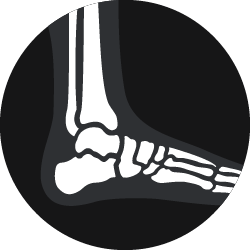





5th Metatarsal Fractures: Surgical Indications for a Jones Fracture
Megan Paulus, MD (East Setauket, NY), reviews 5th metatarsal fractures and discusses indications for surgical intervention.

Megan Paulus, MD (East Setauket, NY), reviews 5th metatarsal fractures and discusses indications for surgical intervention.
At the Shoulder Summit, Anthony A. Romeo, MD (Chicago, IL), discusses the evolution of total shoulder arthroplasty humeral implants from traditional to stemless options with supporting peer-reviewed literature. Dr. Romeo also discusses the features and benefits of the EclipseTM stemless...
Justin W. Griffin, MD (Virginia Beach, VA), leads a panel of experts in a discussion of the current literature on shoulder arthroplasty and how they have incorporated evidence-based approaches into their practices.
Bruce A. Levy, MD (Orlando, FL), performs a posterolateral corner reconstruction using Double Knotless Knee FiberTak® anchors and the FiberTag® TightRope® II PF implant with a curved needle.
Patrick J. Denard, MD (Medford, OR), shows the steps used to prepare and implant the half-wedge baseplate from the Univers Revers™ Augmented Modular Glenoid System.
Alan M. Hirahara, MD (Sacramento, CA), performs a cadaveric demonstration of a midsubstance Achilles tendon rupture repair using the Percutaneous Achilles Repair System (PARS) and ultrasound assistance. The PARS system can be used with ultrasound guidance to show the passage...
Christopher Adams, MD (Arthrex Sr. VP of Medical Affairs), leads a discussion with Aaron J. Krych, MD (Rochester, MN); Travis G. Maak, MD (Salt Lake City, UT); and Patrick A. Smith, MD (Naples, FL), on meniscal pathology and how...
At the Orthopedic Technology and Innovation Forum (OTIF), Chad D. Lavender, MD (Huntington, WV), shares his technique for improving patient outcomes by biologically augmenting the sockets during an ACL reconstruction.
At the East Coast Foot and Ankle Summit, Eric Giza, MD (Sacramento, CA), highlights the evolution of tibiotalocalcaneal nails over the years and explains the benefits of a nitinol nail including intraoperative compression and sustained dynamic compression. Dr. Giza also...
Christopher Hodgkins, MD (Miami, FL), reviews and discusses the literature supporting minimally invasive bunionectomy procedures.
Bruce A. Levy, MD (Orlando, FL), reviews current literature evaluating the safety, biomechanics, and clinical outcomes for suture augmentation in ACL reconstruction.
At the Patellofemoral Forum, Daryl C. Osbahr, MD (Orlando, FL), reviews surgical strategies for managing large patellofemoral osteochondral lesions, considering lesion size, bone involvement, and patient demand during clinical decision-making.
At the Southwest Florida Orthopedic Symposium, Christopher Adams, MD (Naples, FL), presents a simplified approach to evaluating plain radiographs and MRIs for common shoulder pathologies.
At the Peds to Pros course, Kevin W. Farmer, MD (Gainesville, FL), presents clinical outcomes for meniscal repair and discusses clinical applications for using an all-inside repair technique.
Christopher Adams, MD (Naples, FL); Aaron J. Krych, MD (Rochester, MN); and Justin J. Mitchell, MD (La Crosse, WI), discuss published literature on meniscal root repair technique and outcomes.
In this episode, host Christopher Adams, MD, and leading surgeons provide insight into the innovative use of the quadriceps tendon autograft for ACL reconstruction and review relevant scientific literature. Joining Dr. Adams in studio are John Xerogeanes, MD (Atlanta, GA),...
Aravind Athiviraham, MD (Chicago, IL), demonstrates a novel technique for lateral extra-articular tenodesis (LET) using the Knee FiberTak® button.
Kaitlin C. Neary, MD (Boise, ID), reviews indications for double vs triplearthrodesis in flatfoot reconstruction and discusses surgical approach selection, based on recent literature findings.
At the Sports Medicine Fellows Forum, Harris Slone, MD (Charleston, SC), reviews causes of ACL reconstruction failure and outlines a systematic, evidence-based approach to revision ACL surgery, emphasizing tunnel management, graft selection, and alignment and addressing concomitant pathology to optimize outcomes.
Sanjay Konakondla, MD (New York, NY), provides a quick tip regarding tissue identification to confirm one's location while entering the dural space during endoscopic spine surgery.
Thomas Youm, MD (New York, NY), performs a cadaveric demonstration of an endoscopic hamstring tendon repair using a knotless SpeedBridge™ construct.
This "just-in-time" video demonstrates the approach tips for both percutaneous and open fixation of medial malleolar fractures. Surgical anatomy of the medial malleolus, deltoid ligament, posterior tibial tendon, and saphenous vein and nerve is also discussed.


